
Commercial Rental in Japan: What Foreigners Need to Know Before Renting Business Space in Osaka

If you are planning to open a business in Japan, understanding how a commercial rental in Japan works is extremely important.
This is one of the biggest areas of confusion for foreigners moving to Japan. Many people assume renting a commercial property is similar to renting a residential apartment—but it is completely different.
At Omoroi Osaka, commercial rentals are one of our specialties. We regularly help foreign clients secure business spaces across Osaka and the Kansai region.
This article explains how the commercial rental process works from our perspective and what you should expect before starting.
Why Commercial Rentals in Japan Are Different
Commercial rentals in Japan are much stricter than residential rentals.
Landlords care heavily about:
Your visa status
Your business type
Your business plan
Your financial strength
Your renovation plans
Even if you find a property you love, that does not mean you will be approved.
In many cases, approval depends more on your business proposal than the property itself.
Visa Requirements for a Commercial Rental in Japan
Before we begin searching for properties, we first need to confirm your visa status.
In most cases, you need a long-term visa that legally allows you to operate a business in Japan.
Common visa types that work well include:
Spouse Visa
Startup Visa
Business Manager Visa
These visa types usually make the process much easier.
Other visa types, such as:
Student Visa
Standard Work Visa
can be much more difficult for commercial rentals. Some landlords or management companies may refuse applications immediately.
This is why visa status is one of the first things we discuss.
Why We Wait for Your COE Before Starting
At Omoroi Osaka, we usually do not begin serious property searches until you receive your COE (Certificate of Eligibility).
Why?
Because without your COE, there is too much uncertainty.
You may still be waiting on immigration approval, your timeline may change, or your visa may not be issued yet.
Once your COE is approved, we know your move to Japan is becoming real, and we can start searching seriously.
This saves everyone time.
Your Business Type Matters More Than You Think
One of the most important parts of renting commercial space in Japan is your business type.
Every time we inquire about a property, we must explain exactly what kind of business you want to operate.
The management company wants to know:
What type of business you run
Whether customers will visit
Operating hours
Noise level
Renovation requirements
If your business does not fit the building, you will likely be rejected.
Example: Rock Climbing Gym
We once helped a client searching for space for a rock climbing gym.
Even though we found buildings with enough height, landlords rejected the idea because:
Major renovations were needed
Structural modifications were required
Noise and business type were concerns
Even warehouse owners often said no.
This happens often.
Not every property works for every business.
Location Restrictions Matter
The location of your business matters just as much as the building.
Some commercial areas allow customer traffic all day.
Others may restrict:
Operating hours
Customer visits
Noise levels
Food service
Alcohol service
For example, if you plan to open a late-night restaurant or bar, certain locations may not allow it.
This is why we always check local restrictions early.
Prepare Your Business Plan in Japanese
This is one of the most important steps.
You need a business plan.
And ideally, that business plan should be in Japanese.
Your business plan should explain:
Your business concept
Revenue model
Target customers
Expected timeline
Funding
You should also prepare:
Proof of funds
Bank statements
Personal background
Company details (if established)
These documents help management companies and landlords feel comfortable approving you.
Property Viewings for Commercial Rentals
Once the management company approves your business type, we can schedule property viewings.
Commercial viewings are different from residential viewings.
In many cases, the listing agent will attend the viewing with us.
This gives you the chance to ask questions about:
Lease conditions
Restrictions
Renovations
Move-in timeline
Ask as many questions as possible.
Most Commercial Properties Are Skeletons
This surprises many foreign clients.
Most commercial spaces in Japan are rented as skeleton spaces.
That means the interior is often completely empty.
No flooring. No walls. No fixtures. Sometimes nothing at all.
You are responsible for building everything.
This includes:
Interior construction
Plumbing
Electrical
Furniture
Equipment
This can become very expensive.
Renovation Costs Can Be Massive
Before applying, we strongly recommend bringing contractors to inspect the property.
In fact, we often suggest:
First viewing = business evaluation
Second viewing = contractor visit
Get 2–3 contractor quotes if possible.
This helps you understand:
Total renovation cost
Construction timeline
Feasibility
This step is critical.
You do not want to secure a lease only to discover renovation costs are far beyond budget.
Existing Renovations May Cost You Extra
Sometimes you find a property that already has renovations completed.
Examples:
Restaurants
Cafes
Bars
Salons
This can be helpful—but it often comes at a cost.
You may need to:
Pay for the existing equipment
Buy out prior renovations
Pay additional rent
And when you move out, restoration obligations still apply.
Restoration Costs at Move-Out
This is very important.
When your lease ends, you usually must restore the property to its original condition.
This is called restoring to original condition.
That means removing:
Fixtures
Equipment
Renovations
Interior construction
Move-out costs can be expensive.
Always budget for this.
Upfront Costs Are High
Commercial rentals in Japan require significant upfront capital.
For standard commercial spaces, expect roughly 6 months or more in upfront costs.
This may include:
Deposit
Key money
Agency fee
Fire insurance
Guarantor company fee
Restaurants often require even more.
In some cases, restaurant properties can require 12 months or more in upfront payments.
This is one reason many businesses underestimate startup costs.
Popular Areas Are Extremely Competitive
Everyone wants prime locations.
In Osaka, areas like:
Namba
Shinsaibashi
Umeda
are highly competitive.
Good properties move fast.
Even if you love a space, someone else may secure it first.
Speed matters. Preparation matters.
Application and Approval Process
Once you decide to apply, the approval process begins.
This usually involves:
Application submission
Guarantor company review
Management company review
Landlord approval
As a foreign applicant, guarantor company approval is especially important.
Strong documents and preparation make a big difference.
Expect to Meet the Landlord
This is one major difference from residential rentals.
In commercial rentals, landlords often want to meet you personally.
They want to know:
Who you are
What business you are opening
Whether you are trustworthy
This meeting can heavily influence final approval.
Professionalism matters. Preparation matters.
Personal Contract vs Company Contract
Many clients ask if they need to establish their company first.
Not always.
In some cases, you can initially rent under your personal name.
Later, once your company is established, the lease can be amended to transfer to the company.
This depends on the landlord and contract structure.
Final Advice Before Renting Commercial Space in Japan
Commercial rentals in Japan require planning.
You need:
Correct visa
COE
Business plan
Proof of funds
Contractor quotes
Strong documentation
Most importantly, you need to move quickly once the right property appears.
A good commercial property can disappear fast.
If you are planning to open a business in Osaka or anywhere in Kansai, preparation is everything.
The more prepared you are, the smoother the process becomes.
At Omoroi Osaka, we help foreign business owners navigate commercial rentals across Osaka and the Kansai region—from property search to negotiations and final contract support.

Looking to Buy Property in Japan but Not Sure Where to Start?
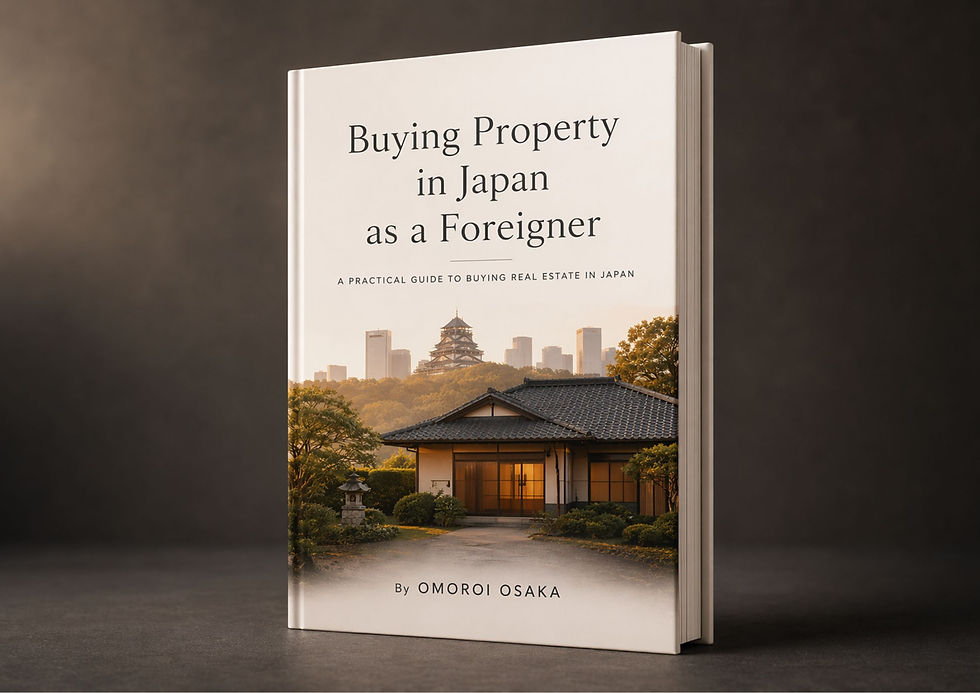
Purchasing property in Japan can feel overwhelming, especially if you're buying from overseas or purchasing your first property in the country. Between understanding ownership rules, taxes, closing costs, financing options, legal procedures, and reviewing property documents, there can be a lot to learn before making a decision.
That's exactly why we created our Foreigner's Guide to Purchasing Property in Japan.
This comprehensive guide was designed specifically for international buyers and walks you through the entire purchasing process from start to finish. Whether you're looking for a vacation home, investment property, retirement property, Airbnb opportunity, or a permanent residence, this guide will help you better understand what to expect before you begin your search.
Inside the guide, you'll learn about:
The complete property purchasing process in Japan
Costs and fees involved when buying real estate
Taxes and ongoing ownership expenses
Property ownership for foreigners
Financing and mortgage considerations
Important documents and legal requirements
Common mistakes foreign buyers make
The role of real estate agents, judicial scriveners, and other professionals
Property management options for overseas owners
Step-by-step timelines from property search to closing
Our goal is simple: to help buyers feel informed, confident, and prepared before making one of the biggest purchases of their lives.
If you're considering buying property in Japan, this guide is an excellent place to start.


Comments